Need roof repair help in Dublin?
- Connects you with local roofing contractors
- Written quotes, no obligation
- Storm and hail damage help
- Plans for every season
No obligation
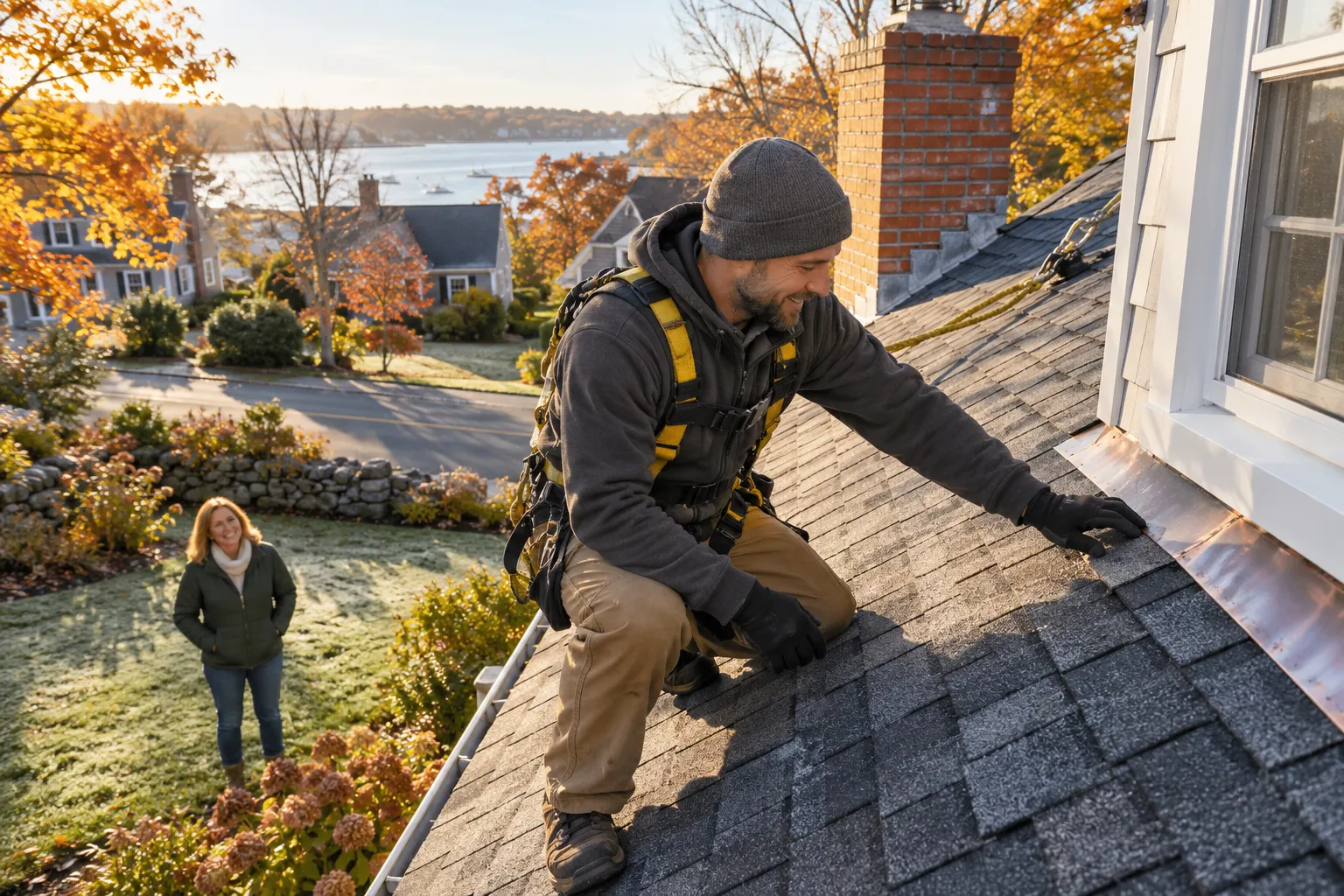
A roof problem can show up as a brown ceiling stain, a few missing shingles, or a drip in the attic after a heavy storm. Whatever it looks like, it is worth checking soon. Small openings let in water, and water spreads further than most people expect.
Kickedchange Roofing is a referral service. We do not do the roof work. We connect homeowners across the Dublin area with independent local roofing providers who inspect the damage, explain the options and give a written quote. Because our region sees cold winters, thaw cycles and coastal storms, a good provider will look at the whole roof, not just the one wet spot. The provider decides whether a repair makes sense or whether the roof is near the end of its life, and you stay in charge of every choice.
A drip from the ceiling feels urgent, and it is. Stay calm and take a few safe steps.
Emergency roof repair usually means water is coming in right now, a branch has opened the roof, or wind has stripped a section bare. Many providers can respond quickly, though availability depends on the weather and their schedule. The first visit is often a protective cover. The lasting fix comes after the roof dries and the damage is fully understood.
Water is patient. It slips under a lifted shingle, runs along the decking and soaks insulation long before a stain appears below. In our cold climate, that trapped water turns to ice at night and pushes the gap wider. Thaw cycles repeat this again and again. Spring snowmelt then sends a lot of water to the same weak spot.
Coastal storms bring gusts that lift shingle edges and rattle flashing loose. Falling limbs can crack the surface. After a big blow, look from the ground for curled, missing or dented areas. Providers can often help document damage for a claim. Some policies may cover sudden damage, so check your policy and ask your insurer what applies.
Most repair visits fall into a few groups.
The wet spot inside rarely sits right under the hole outside. A provider usually starts in the attic, looking for dark decking, damp insulation and daylight. Then they check the roof surface, flashing and penetrations. Some use a hose test or a moisture meter. Expect them to show you photos and explain what they found.
Older Cape Cod style homes and multi-family buildings often have several roof planes, small dormers and patched layers from past jobs. Each seam is another place for water to enter. Poor attic airflow in older houses also feeds ice dams. A careful provider checks ventilation along with the visible damage.
A repair makes sense when the damage is limited and the rest of the roof is sound. Replacement may be the smarter move when shingles are brittle, granules fill the gutters, leaks keep returning, or damage spreads across several slopes. Widespread hail damage can also lead to hail damage roof replacement rather than patching. Ask the provider to explain why they recommend one path over the other.
Keep it simple and safe. Catch water with buckets, and puncture a bulging ceiling bubble only if you can do it safely, letting the water drain into a container. Move valuables out of the room. Leave tarping to the provider, since wet roofs and ladders are a risky mix. A temporary fix is only a pause, not a solution.
Asphalt shingles are the most common and the easiest to patch. Metal roofs usually leak at fasteners and seams. Slate and tile need careful hands because pieces break when walked on. Flat or low-slope sections depend on membranes and seals. Ask whether the provider regularly works on your roof type.
Local roofing contractors know how our winters treat a roof. When you talk with providers, ask for a written quote that lists materials, labor and cleanup. Ask what warranty details come with the work, and get them in writing. Compare more than one quote when you can, and be cautious about anyone pushing you to sign on the spot.
A repair is not the end of the story. Once the roof is sealed, a few habits keep the problem from coming back.
A smart time for non-urgent work is a dry stretch in early fall, when providers can work in mild weather and shingles seal properly. If you already see a problem, do not wait for the season to turn.
A provider checks the attic, decking, flashing and shingles to trace where the water actually enters.
You receive a clear price and scope in writing before any work begins.
Providers fix damaged shingles, flashing, vent seals and valleys using materials that suit your roof.
Many providers share simple seasonal checks so the same spot is less likely to fail again after the work is done.
Prices vary with roof type, pitch, access and how far the damage has spread. These are typical U.S. ranges only. Always ask for a written quote from the provider before work starts.
| Repair item | Typical range | Notes |
|---|---|---|
| Replace a few shingles | $150 – $500 | Small, easy-to-reach areas |
| Flashing repair | $200 – $800 | Chimneys, walls and skylights |
| Vent pipe boot replacement | $150 – $450 | Common leak source on older roofs |
| Leak detection and inspection | $100 – $400 | Some providers include it in the repair |
| Temporary tarp or cover | $300 – $1,000 | Depends on roof size and access |
| Larger section repair | $1,000 – $3,500 | Multiple slopes cost more |
Tell us what you see, such as a stain, a drip or storm damage, and where it appears.
We connect you with an independent roofing provider that serves your part of the region.
The provider inspects the roof and gives you a written price and plan.
The provider does the work, then you follow a simple seasonal upkeep routine.
We explain the process in simple words so you know what to expect before you speak with a provider.
Local roofing providers do the work, so you hear their own findings and advice.
Ask each provider for a clear written quote so you can compare options calmly.
Providers in our network understand how cold winters and coastal storms affect local roofs.
Limited damage on an otherwise sound roof can often be repaired. If shingles are brittle, leaks keep coming back, or damage covers several slopes, replacement may make more sense. A local provider can inspect the roof and explain which path fits.
You can limit the mess inside with buckets and by moving belongings. Stay off the roof, since wet or icy surfaces are dangerous. A roofing provider should do any tarping or sealing. Request a callback to check provider availability.
Some policies may cover sudden damage from storms, but coverage varies. Check your policy and ask your insurer. Providers can often help document damage for a claim.
Have a roof question? Send a request through the form or email contact@kickedchange.living. A provider in our network can follow up with questions and a written quote.
No obligation